
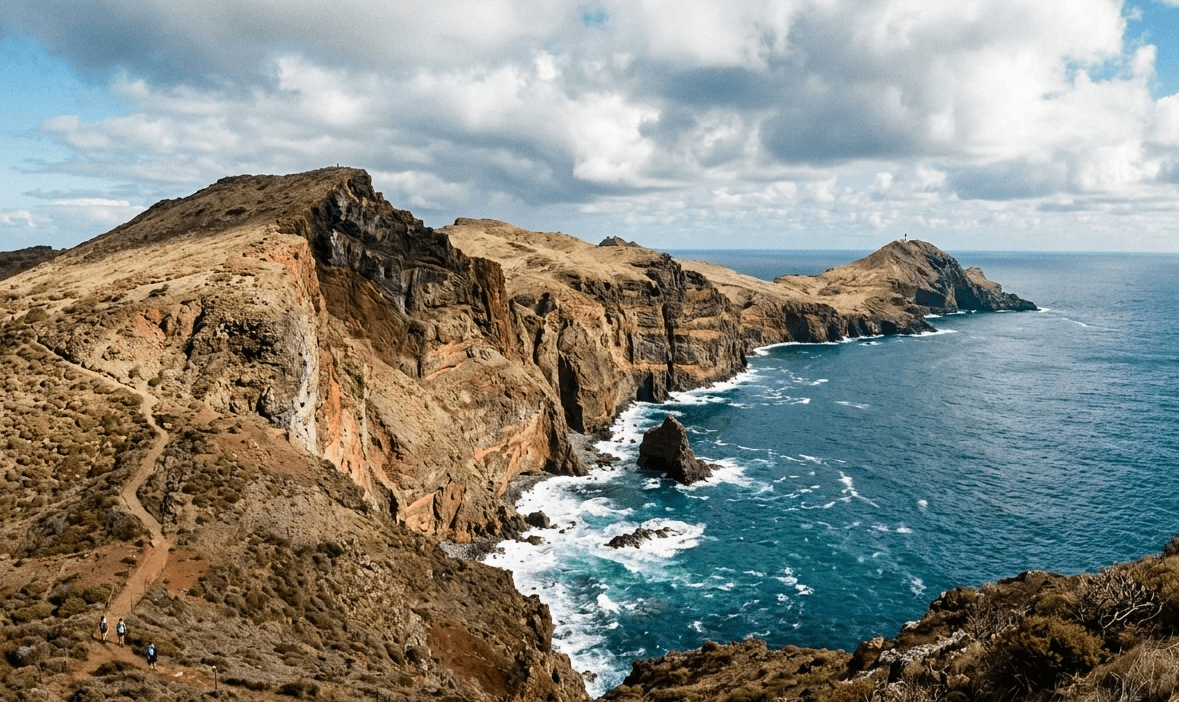
Madeira is known for its mild climate, but there are no fewer than 30 microclimates across the island. Because steep mountains rise abruptly from the sea, they drastically influence wind patterns and rainfall distribution. Checking a single, general weather forecast for Funchal won't tell you what is happening to your house.
The North vs. South Divide
The island is divided by a massive central mountain range—a 6,000-foot wall of basalt. This creates the famous "Portal Phenomenon" through the island's tunnels. It is entirely common to enter a tunnel near Funchal in 24°C (75°F) sunshine and emerge just 3 kilometers later on the North Coast in a 16°C (60°F) misty drizzle. A home located on the northern slopes faces entirely different weathering and dampness challenges than a sun-baked villa on the southern coast.
The East vs. West Contrast
While the North and South differ in sunshine, the East and West contrast in exposure. The eastern edge of the island is a raw, wind-swept environment exposing properties to relentless Atlantic winds, sea salt spray, and intense UV radiation. In contrast, the western plateaus trap moisture, creating lush, highly humid environments that require aggressive mold prevention and interior ventilation.
Your home's microclimate is unique, and its care should be too. Contact us to develop a Home Watch strategy tailored specifically to your location.